
You can also add to your health journal encourading news about advances in the stroke recovery management. Here are some of them:
IpsiHand - a brain-controlled hand prosthesis for stroke rehabilitation
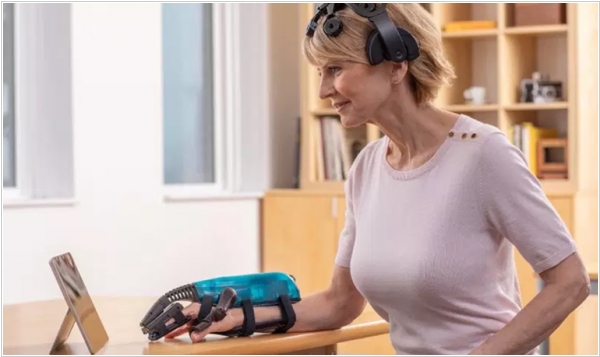
In 2021 Neurolutions has received the first-ever FDA approval for a brain-computer interface device. IpsiHand is a brain-controlled hand prosthesis for stroke rehabilitation. It allows patient to regain controlled hand movement. To do this, a user wears an EEG reader on their head, which records patterns of brain activity corresponding to specific movements. Once a pattern is identified, the hand prosthesis guides the user to perform desired movement. The device has undergone clinical trials and demonstrated effectiveness in restoring movement in all participants within three months.
RNA therapy may protect neurons after stroke
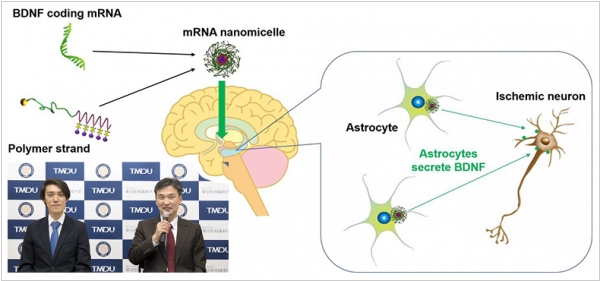
RNA drugs have become a hot topic in 2021, thanks to the success of RNA vaccines. Now, scientists at Tokyo Medical University have come up with the idea of using this technology to protect neurons after stroke. There's a protein called BDNF that can increase nerve cell survival, but it's too large to path the blood-brain barrier. What if it could be produced directly in the brain using RNA code? The scientists have implemented this idea: RNA molecules are small and can cross the barrier, but they're not stable enough to be injected directly into the bloodstream. Therefore, the scientists wrapped them in polymer nanoparticles that gradually dissolve. The researchers have successfully tested the therapy on rats.
Virtual reality can help recover from a stroke.

The Kessler Foundation, a rehabilitation technology research organization, in 2018 partnered with virtual reality developer Virtualware to create the VR-SRT system to support stroke recovery. The system's goal is to improve spatial attention and body awareness in a 3D virtual world. In addition to VR glasses, the system includes a Kinect-type sensor that tracks head and hand movements.
Stem cell treatment gets stroke patients back on their feet
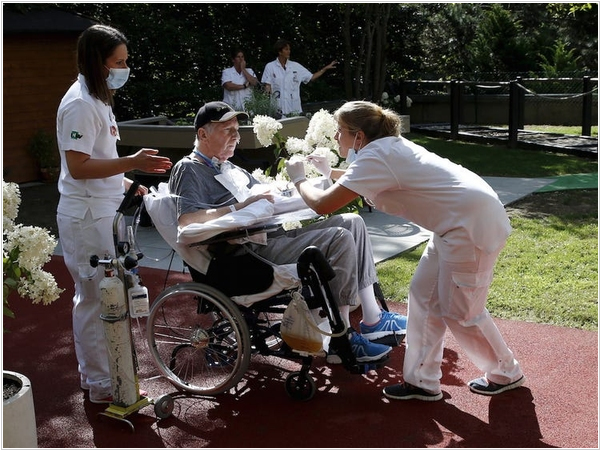
A team of neurosurgeons at Stanford University School of Medicine, led by Gary Steinberg in 2016 conducted an experiment: 18 stroke patients had their brains injected with stem cells. The patients themselves acted as stem cell donors. The doctors injected the cells directly into the areas of the brain located near the area affected by the stroke. Not all patients experienced improvement, but for some, the effect exceeded all expectations. "This isn't just a situation where a patient couldn't move a finger and now can. People were confined to wheelchairs and now they can walk," says Steinberg. However, there were also side effects: headaches, nausea and depression. Scientists plan to conduct further studies using stem cell injections. The next experiment is expected to involve 150 participants.