
You can also add to your health journal encourading news about advances in the pancreatic cancer management. Here are some of them:
Novocure's wearable device approved for pancreatic cancer treatment

Israeli company Novocure in 2026 received FDA approval for its Optune Pax device for the treatment of pancreatic cancer (the similar device was previously approved for the treatment of brain and lung cancer). It's a wearable device that targets tumors with alternating electrical fields and destroys them. The treatment disrupts cancer cell division and leaves surrounding healthy tissue largely unaffected, as it has different properties. According to the results of a phase III clinical trial, Optune Pax, in combination with chemotherapy, resulted in a survival rate of 16.2 months, compared to 14 months with standard treatment. The time to pain symptom progression increased to 15.2 months, compared to 9 months in the control group. One-year survival rates were 68% and 60%, respectively.
Universal immunotherapy for pancreatic cancer developed
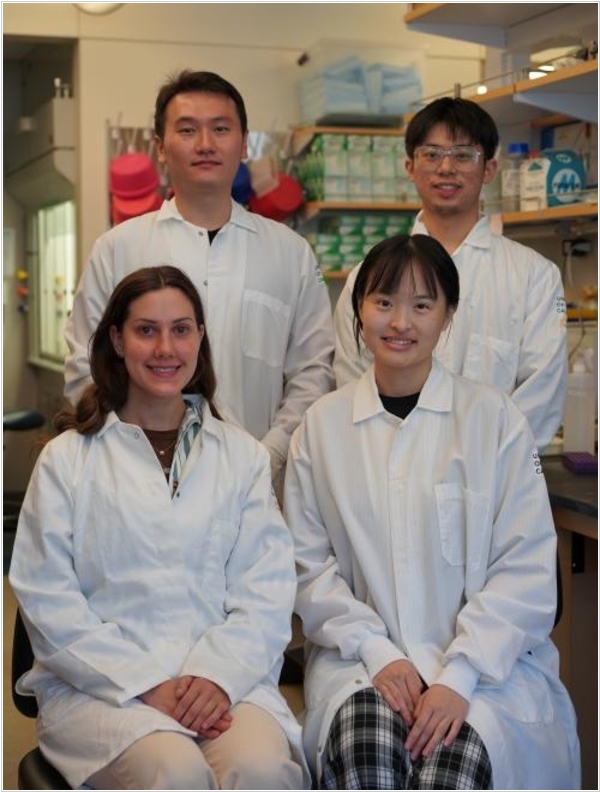
CAR-T cell therapy has revolutionized the treatment of blood cancers, but has faced several challenges when treating solid tumors like pancreatic cancer. Pancreatic tumors form a dense protective barrier of connective tissue and suppressive immune cells that block drugs from reaching the cancer cells. To address these challenges, a team from the University of California decided to use a powerful type of immune cell - invariant natural killer (NKT) cells. They added a chimeric antigen receptor (CAR) to the cells, targeting the mesothelin protein present on pancreatic cancer cells. This resulted in multiple independent mechanisms of attack against the tumor. In 2025 experiments in mice with normal and metastatic pancreatic tumors showed excellent results. NKT cells successfully searched for cancer foci and metastases regardless of localization and penetrated into tumor cells.
New drug increased life expectancy in pancreatic cancer by 50%

The mortality rate for pancreatic cancer is very high for two reasons. First, it is difficult to detect in the early stages and second, only one in three patients responds to chemotherapy and shows clinical improvement. Scientists from the University of Washington (led by Kian Lim) in 2022 created a drug, ATI-450, that increases the sensitivity of pancreatic cancer cells to chemotherapy while simultaneously reducing the side effects of treatment. So far, it has only been tested on mice, and it has, on average, increased their lifespan by 50%. The reduction in side effects is due to the compound's anti-inflammatory properties. The scientists stated that the new approach is potentially effective for various types of gastrointestinal cancer and intend to confirm this in further studies.
Implant makes chemotherapy more effective against pancreatic cancer
Chemotherapy for pancreatic cancer is typically ineffective because it's difficult to deliver the drug specifically to this organ without harming the rest of the body. American startup Advanced Chemotherapy Technologies in 2020 created a coin-sized implant that fits snugly into the pancreas and delivers medication directly to it. It uses iontophoresis technology: drug molecules gradually migrate from the implant into the organ under the influence of an electrical field. Of course, the implant must be connected to a catheter and a power source through a port in the abdominal cavity. The startup successfully tested the technology in mice and received a grant for human clinical trials.
Scientists reprogrammed macrophages to fight pancreatic cancer
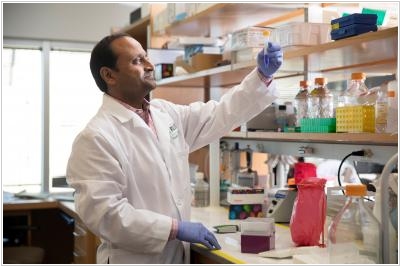
Ideally, immune cells (macrophages) should kill cancer cells themselves. However, due to random mutations and rapid evolution, tumors develop cells that deceive macrophages and even force them to work for them (macrophages mistake them for young cells and secrete growth factors that further stimulate tumor cell division). In pancreatic cancer tumors, the number of macrophages that help tumors grow far outweighs those that suppress them. Researchers from Rush University Medical Center (USA), led by Vineet Gupta in 2019 developed a molecule that binds to macrophages and activates the CD11b protein, a threat sensor. Scientists tested the molecule on mice with pancreatic cancer and achieved an increase in the concentration of T cells in the tumor, significantly slowing tumor growth. The researchers hope their new compound will help develop new immunotherapy drugs for pancreatic cancer.