
You can also add to your health journal encourading news about advances in the cystic fibrosis management. Here are some of them:
Universal gene therapy for cystic fibrosis developed

Cystic fibrosis is caused by a mutation in a single gene, CFTR, but it can have over 1,700 different variants. Scientists at the University of California, led by Dr. Steven Jonas, in 2026 developed universal treatment to correct any mutation in a single dose. To do this, they used lipid nanoparticle-based gene therapy as a non-viral delivery system. The particles were designed to simultaneously deliver three editing components: the CRISPR mechanism for cutting DNA at the target site, molecules for targeting the correct genomic site, and a DNA template encoding a complete, functional copy of the CFTR gene. Experiments in human cell culture showed successful delivery of the correct CFTR variant to 3-4% of cells. However, even this small number of changes resulted in restoration of 88% to 100% of normal CFTR function across the entire cell population. These findings may change future approaches to cystic fibrosis treatment and offer hope for the 10% of patients who do not benefit from standard treatment due to genetic factors.
Startup Sionna Therapeutics hopes to cure cystic fibrosis

The startup Sionna Therapeutics hopes to create a blockbuster drug for the treatment of the severe lung disease cystic fibrosis. And it seems investors believe in the project – they have invested $150 million in the initial round. The startup team believes they have created a molecule that will fully restore the function of the cystic fibrosis transmembrane conductance regulator protein 1 (NBD1), the primary cause of the disease. Currently, the cystic fibrosis drug market is dominated by Vertex Pharmaceuticals, which produces half of all approved drugs for this disease. However, Sionna Therapeutics says that existing treatments only partially restore NBD1 function.
Improved CRISPR will allow safe DNA editing to treat cystic fibrosis

Cystic fibrosis is considered one of the most common genetic diseases in the world, so CRISPR gene editing technology could potentially help solve this problem. A team of researchers from the Netherlands in 2021 used Prime editing - an improved and safer version of CRISPR that inserts the desired fragment into DNA without damaging anything else. Experiments on human stem cells showed that the treatment corrects mutations and restores the cells to a healthy state. "We hope that in the future, this will make it possible to cure and prevent genetic diseases in humans. Our work is a major step toward the clinical use of this technology," concluded study author Maarten Geurts.
Cystic fibrosis drug Trikafta named breakthrough of the year

In October 2019 American pharmaceutical company Vertex Pharmaceuticals received FDA and European Commission approval for its new cystic fibrosis drug Trikafta and two months later Science magazine included the drug in its list of the top 10 breakthroughs of the year. Trikafta is the result of 30 years of research into the molecular causes of cystic fibrosis and combines several mechanisms of action. Trials indicate that the drug can significantly help at least 90% of patients. However, the cost of treatment is astronomical—an annual course in the US costs approximately $300,000, and the drug will likely need to be taken for life.
RNA inhalations will help patients with lung diseases
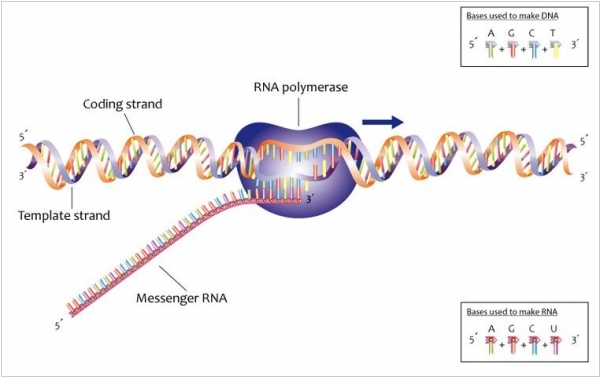
RNA drugs (which can produce the necessary substances directly in the body's cells) are considered one of the most promising medical technologies. The main challenge in this area is how to reliably deliver the RNA drug to cells before it is destroyed. Therefore, good news for patients with asthma and lung diseases is that scientists from MIT have developed a new technology for delivering such drugs via inhalation. They learned how to form 150-nm spheres from beta-amino esters (positively charged branched polymers) that can carry mRNA. The scientists experimentally tested the effectiveness of the technique on mice. If the approach proves effective in clinical trials, it could help treat genetic diseases that affect lung epithelial cells, as well as asthma and other ailments currently considered incurable.