
You can also add to your health journal encourading news about advances in the chronic back pain management. Here are some of them:
A single injection of Rexlemestrocel-L may relieve chronic low back pain for a year
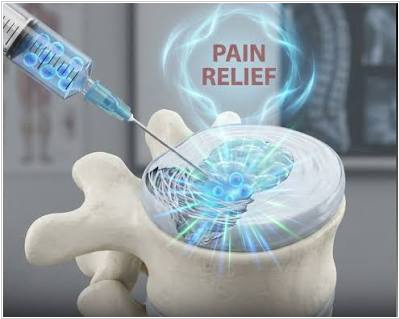
Australian biotech company Mesolab presented the results of an experimental drug, Rexlemestrocel-L, created using bone marrow stem cells. The treatment consists of a single injection administered directly into the damaged disc. The therapy is intended for people with chronic low back pain associated with disc degeneration. This new approach differs from conventional chronic pain treatments because it directly targets the source of disc degeneration. Results show that the effect lasts up to 12 months. Next year, scientists will also present final results on a new sample of 350 participants. If the treatment's effectiveness is confirmed, this single injection could become a new treatment option for chronic low back pain.
New brain implant relieves any type of pain without medication
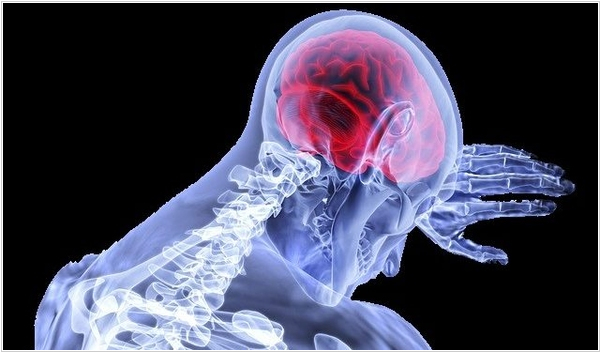
Chronic pain is typically treated with a spinal neurostimulator, but this helps with leg and back pain, while pain higher up the spine is a challenge. Scientists at the Grossman School of Medicine in New York, led by Gene Wong and Valentino Mazzia, in 2021 created a brain implant that eliminates pain directly where it is perceived. They identified an area in the rat brain that is activated by pain and an area whose activation compensates for pain, and connected them using two microelectrode arrays. As soon as pain occurs, the implant activates pain-compensating neurons. Testing on rat models has shown impressive results. The implant performed well in real-time treatment of mechanical, chronic inflammatory and neuropathic pain.
Wasabi receptor: The best hope for treating chronic pain

Currently, only opioids effectively relieve severe chronic pain. They block opioid receptors in neurons that transmit pain signals. Blocking pain this way is relatively simple, but it's known to be addictive, requires higher doses, and leads nowhere. However, scientists already know a more sophisticated way to combat pain: blocking specific receptors in neurons that initiate pain signals. This is more difficult, but it prevents addiction. The most promising receptor for this purpose is TRPA1, the so-called wasabi receptor (if you want to experience how it works, go to a Japanese sushi restaurant and try some wasabi). Eli Lilly in 2019 made the most progress in exploiting this receptor. Last year, they acquired Hydra Biosciences, a startup developing a drug to block TRPA1, for millions. This drug is currently in Phase I clinical trials.
Nevro - implantable neurostimulator for back and leg pain control
Neurostimulator implantation for chronic back and leg pain has been used for over 10 years. But progress continues. The American company Nevro in 2019 released the HF10 neurostimulator, optimized for pain control. Firstly, it is easy to install. Although electrodes are still implanted into the spine and the neurostimulator itself is still implanted under the skin, the company has developed a procedure that does not even require hospitalization. Furthermore, it is possible to try the neurostimulator before implantation (by wearing it on the waist, not under the skin). Secondly, the HF10 (unlike other neurostimulators) operates at a higher frequency of 10 kHz. This eliminates the burning sensation (paresthesia) when the neurostimulator is turned on. The company promises that a person can even sleep while the neurostimulator is in use.
Bayer released agadget to relieve back pain.
Previously, implantable neurostimulators were used to treat chronic back and leg pain, but now surgery is unnecessary—you can simply buy a gadget, such as the Bayer Aleve. The device can be used at home as needed: simply apply it to your back, turn it on, and sit for 30 minutes. Using low-power electrical impulses, it blocks pain signals transmitted to the brain through the spine and stimulates nerves, promoting the production of endorphins, which are the body's natural painkillers.