
You can also add to your health journal encourading news about advances in the asthma management. Here are some of them:
Exdensur approved for asthma treatment (administered twice-yearly)

Exdensur (depemokimab) from GSK has been approved by the FDA and European Commission for the treatment of respiratory diseases in adults and adolescents over 12 years of age. The drug (a monoclonal antibody that blocks interleukin-5, a key inflammatory cytokine) will be used for treatment of severe asthma, as well as chronic rhinosinusitis with nasal polyps. Exdensur only needs to be taken twice a year. It is the first and currently the only ultra-long-acting drug for asthma. It provides sustained effectiveness for six months and protects against exacerbations. According to clinical trial results, the frequency of exacerbations over the course of a year decreased by an average of 72% compared to placebo. Patients with rhinosinusitis also noted a reduction in the size of polyps and a decrease in nasal congestion.
Wing is a portable spirometer for smartphone
A standard portable spirometer can't fit in your pocket, meaning it's not always convenient to carry. However, conditions like asthma and COPD are best monitored regularly and can be predicted before an attack. American startup Sparo Labs in 2021 created a more modern spirometer – Wing. It has a streamlined design and is pocket-friendly. It uses your smartphone as a display and storage device. A dedicated app not only displays measured parameters but also warns of dangerous conditions and provides advice on what to do. The gadget was clinically tested and is FDA-certified. It costs $99.
Amgen and AstraZeneca close to launching new asthma drug

Leading asthma medications such as Dupixent (from Regeneron and Sanofi) and Fasenra (from AstraZeneca) are approved for use in patients with eosinophilic asthma. However, there is no effective treatment for patients with non-eosinophilic asthma. Amgen and AstraZeneca want to change that. In 2020 their drug Tezepelumab successfully completed Phase 3 clinical trials (at least according to the companies, it reduced annual asthma exacerbations by 71%). The drug is an inhibitor of thymic stromal lymphopoietin.
Novartis to make asthma treatment more convenient and effective
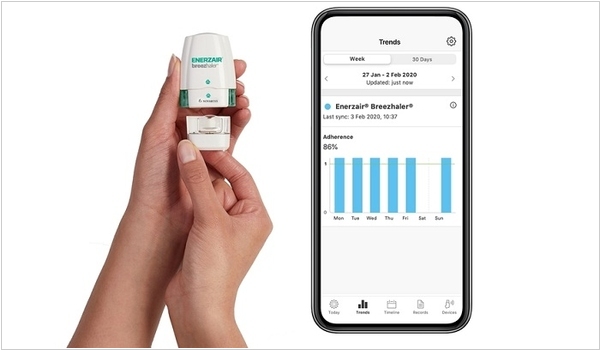
Swiss pharmaceutical giant Novartis in 2019 announced the successful completion of Phase III clinical trials of the asthma drug QMF149. The drug itself is not revolutionary. It is a combination of inhaled corticosteroids (ICS) and long-acting beta-agonists (LABA). Three competing pharmaceutical companies have already certified drugs with a similar composition: GlaxoSmithKline (Advair and Breo), AstraZeneca (Symbicort), and Merck (Dulera). But Novartis's advantage lies in its Breezhaler microinhaler, which allows for precise dosing and convenient inhalation of the medication's granules. The new medication will soon be available in Europe.
RNA inhalations will help patients with lung diseases
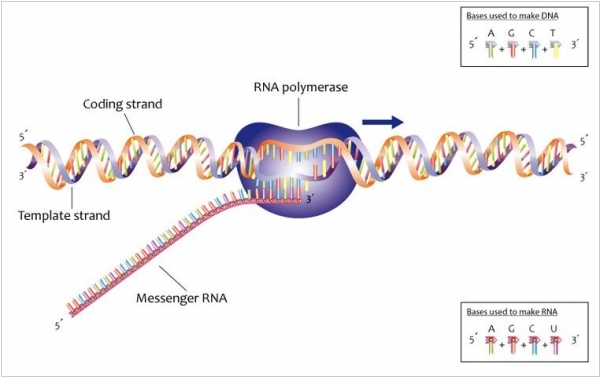
RNA drugs (which can produce the necessary substances directly in the body's cells) are considered one of the most promising medical technologies. The main challenge in this area is how to reliably deliver the RNA drug to cells before it is destroyed. Therefore, good news for patients with asthma and lung diseases is that scientists from MIT in 2019 developed a new technology for delivering such drugs via inhalation. They learned how to form 150-nm spheres from beta-amino esters (positively charged branched polymers) that can carry mRNA. The scientists experimentally tested the effectiveness of the technique on mice. If the approach proves effective in clinical trials, it could help treat genetic diseases that affect lung epithelial cells, as well as asthma and other ailments currently considered incurable.