
You can also add to your health journal encourading news about advances in the aids management. Here are some of them:
WUST has developed gene editing method to destroy HIV in cells
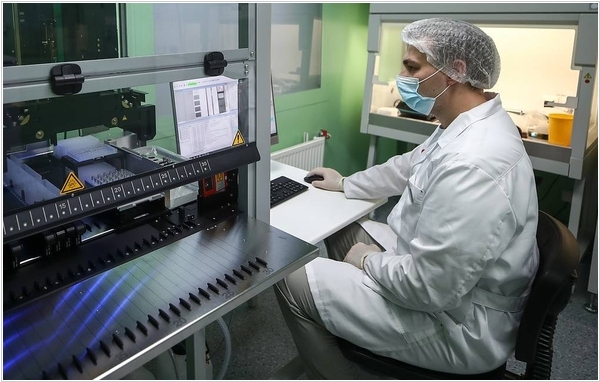
Research team from Wuhan University of Science and Technology in 2025 has created a targeted delivery system for gene editing tools that can be used to combat the human immunodeficiency virus (HIV). The proposed EMT-Cas12a method is based on the use of modified exosomes to transport the CRISPR-Cas12a system. According to the authors, this mechanism allows the editing tools to penetrate directly into infected cells, where they locate and fragment the viral genome. A key difference between this technology and existing antiretroviral therapy is its ability to target latent reservoirs of infection. This allows for a "functional cure", completely eliminating the virus from the body. Experiments on infected mice in one group demonstrated complete clearance of the virus in two out of three individuals. The method has now entered clinical trials.
Moderna to develop RNA vaccines for HIV
Moderna, the company that developed one of the two most effective coronavirus vaccines, plans to use its microRNA technology to develop vaccines for seasonal flu and HIV. As for HIV treatment, they most likely won't be able to do it in the short term, but it would be nice to have a flu vaccine by next fall, or more precisely, a combination flu and coronavirus vaccine (since it's clear that both viruses will be present every year). The key to microRNA vaccines is that antibodies to the virus are produced within the body, by the body's own cells, which personalizes their action.
The second person in history is officially cured of HIV
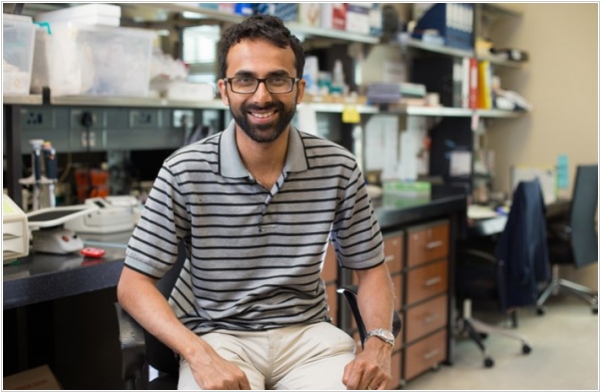
Doctors from Cambridge University (namely, Ravindra Gupta - pictured) in 2019 announced that they have completely cured a certain "London Patient" of HIV infection with a bone marrow transplant. Three years ago, he received cells from a person with the CCR5 delta 32 genetic mutation, which confers resistance to HIV. And now, after three years WITHOUT antiretroviral therapy, the HIV virus is no longer detected in his blood. Ravindra says this is the second case in history, after the "Berlin Patient," who was cured using the same method in 2007. True, his colleagues from the British National Institute in 2016 also reported the cure of an HIV patient using immunotherapy.
Antibody cocktail stopped HIV for several months
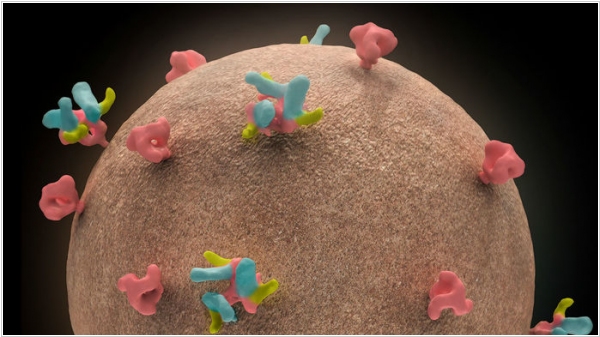
Antiretroviral drugs allow HIV-infected people to maintain low viral loads, but they must take the medication daily for the rest of their lives. A team of scientists led by Michel Nussenzweig of Rockefeller University in 2018 developed and tested a drug made of two antibodies, which was able to suppress the spread of the immunodeficiency virus for several months in two patients. If the results obtained by Nussenzweig's group can be repeated in larger studies, the "cocktail" of the two antibodies could change the lives of HIV-infected people, reduce the risk of the virus developing resistance to antiretroviral drugs and even slow the spread of HIV infection worldwide. In the images, antibodies (blue and green) attach to the immunodeficiency virus, binding to (pink) proteins of its protein coat.
Doctors have cured an adult of HIV for the first time.
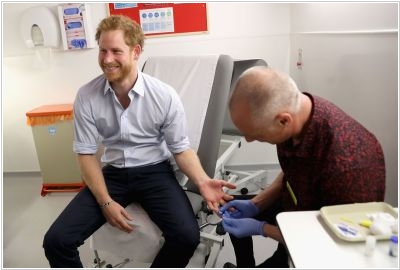
A team from the UK's National Institute for Medical Research in 2016 reported a successful trial of a new therapy to combat the human immunodeficiency virus (HIV). The new method allows to detect and destruct HIV throughout the body, not just in areas of its highest activity. The therapy first eliminates infected cells and then activates T cells, which mediate the body's immune response. The new method was tested on 50 adult volunteers and achieved success in the very first experiment. The researchers announced that they had almost completely cured a 44-year-old patient (he is smiling in the photo). After the therapy, no viruses were detected in his blood. Of course, in the case of HIV, it takes several years to be completely sure that the virus has cleared the body.